Your Size Is Not the Problem: What the Fashion Industry Gets Wrong About Fit
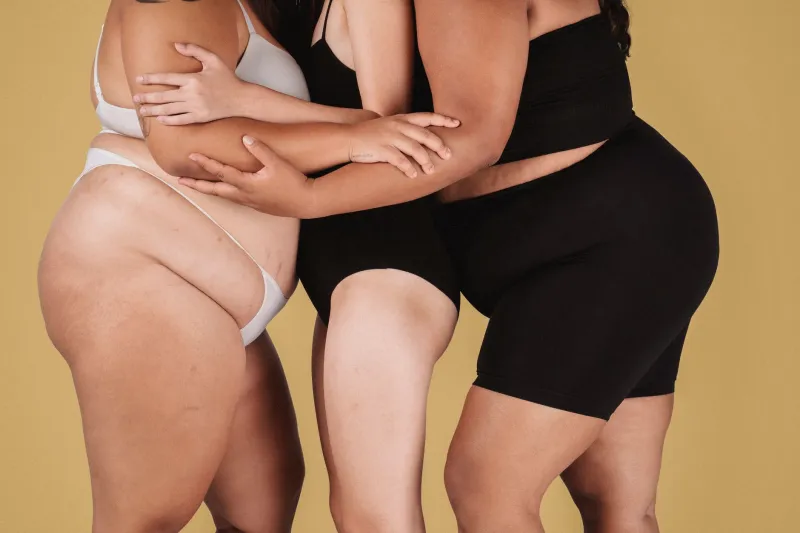
Let's be honest about something that doesn't get said enough: the fashion industry has a sizing problem, and it has nothing to do with you.
Every season, major retailers roll out campaigns celebrating "body positivity" while quietly capping their size ranges at a 14 or an XL. They hire one curve model for a lookbook, post it on Instagram, and call it progress. Meanwhile, millions of people across the US are standing in fitting rooms trying to make clothes work for bodies that the industry simply didn't design for — and then walking out feeling like they're the ones who failed.
That's not a personal shortcoming. That's a systemic design flaw.
The Numbers Don't Lie
The average American woman wears a size 16 to 18. Let that sink in. The demographic that retailers consistently ignore or underserve is, statistically speaking, the majority of their potential customer base. A 2021 study by Coresight Research found that plus-size women's apparel represents a $32 billion market in the US — and it's growing. Yet only about 20% of women's clothing is produced in extended sizes.
The gap between what's available and what's needed isn't a niche issue. It's a massive market failure dressed up in corporate talking points.
And it's not just about plus sizing. People who are petite, tall, broad-shouldered, long-waisted, or built with what stylists call a "non-standard" proportional ratio are equally underserved. Fast fashion's size range assumes a very specific body shape as the default — and if you don't fit that mold, you're expected to just... make it work.
What Stylists Actually Say
We talked to a few independent stylists who work with clients across body types, and the frustration was unanimous.
"My clients come in feeling like something is wrong with them," says one New York-based stylist who works primarily with professional women. "They've tried on ten pairs of pants and nothing fits right, and they internalize that. But the truth is, most ready-to-wear is designed on a size 6 sample and scaled up or down with almost no consideration for how proportions actually change across body types."
Another stylist based in Atlanta who specializes in streetwear and elevated casual dressing put it more bluntly: "Fast fashion doesn't want to invest in proper grading. It costs money to actually rethink a pattern for a size 22 versus just stretching a size 10. So they don't do it. And the customer suffers."
The good news? Both stylists pointed to tailoring as a legitimate game-changer — and not just for people with big budgets.
"Even small alterations make an enormous difference," the New York stylist noted. "Taking in a waist, hemming a pair of trousers, adding a dart to a blazer — these are relatively affordable fixes that can turn a $40 thrift store find into something that looks custom. Learning to work with a local tailor is one of the best style investments anyone can make."
The Brands Actually Getting It Right
It would be easy to end this piece on a purely critical note, but there are brands out there doing the work — and they deserve recognition.
Universal Standard has built its entire identity around fit equity, offering sizes 00 through 40 in the same styles, with no price differentiation. Their "Foundation" collection is designed to actually fit across body types, not just accommodate them.
Girlfriend Collective is another name that comes up consistently, particularly for activewear. Their size range runs from XXS to 6XL, and they use recycled materials — so you're not just getting a better fit, you're supporting a more responsible production model.
For denim specifically, Good American (co-founded by Khloé Kardashian and Emma Grede) launched with a commitment to size inclusivity from day one, offering every style in sizes 00 through 32. It's not a perfect brand, but the intentionality around fit across the range is real.
Smaller, independent labels are also stepping up. Brands like Henning (designed specifically for tall women sizes 12–32) and Rebdolls (a Black woman-owned brand offering bold, trend-forward styles in sizes XS–5X) are proving that serving underrepresented bodies and having genuine style aren't mutually exclusive.
Tailoring Tricks Worth Knowing
While we push for systemic change, here are a few practical moves that stylists swear by:
- Buy for your largest measurement, alter the rest. If a dress fits your hips but gaps at the waist, buy for the hips and have the waist taken in. It's almost always cheaper than you think.
- Hem everything. Seriously. A proper hem transforms the entire silhouette of a garment and signals intentionality in a way that dragging fabric never will.
- Learn your "fit hierarchy." Know which fit issues bother you most — shoulder seams that sit wrong, waistbands that gap, sleeves that are too long — and prioritize fixing those first.
- Don't sleep on stretch. Fabrics with 2-4% elastane give you significantly more real-world fit flexibility without sacrificing structure. It's not cheating; it's smart shopping.
What Demanding Better Actually Looks Like
Here's the part that requires a little more from all of us: buying from brands that get it right, even when it costs more. Leaving reviews that specifically call out poor sizing. Using social media to hold retailers accountable when their "inclusive" campaigns don't match their actual inventory.
Fit freedom isn't just a personal style goal. It's a consumer rights issue. When a brand tells you through their size range that your body doesn't belong in their clothes, that's a values statement — and you're allowed to respond to it accordingly.
At Zaraco, we believe style is for everyone willing to own it. That means pushing back on an industry that has historically treated most bodies as afterthoughts. Your proportions aren't a problem to be solved. They're the starting point for every great outfit you'll ever wear.
The clothes should fit the person. Not the other way around.