The Accessory Is the Outfit: Why Your Details Are Doing All the Heavy Lifting
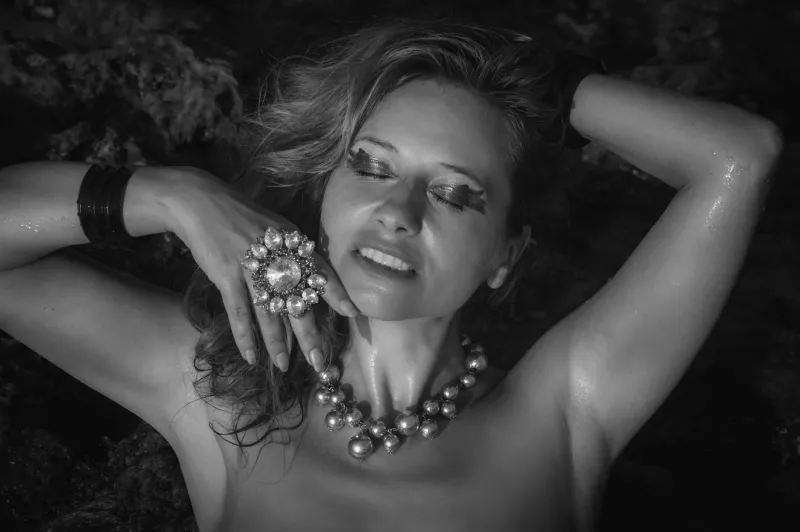
Here's a take that might rearrange how you think about getting dressed: your clothes are the background. Your accessories are the point.
The most stylistically interesting people — the ones who stop you mid-scroll or make you look twice on the street — aren't necessarily wearing anything extraordinary from the neck down. They're wearing a plain white tee and straight-leg jeans. What makes them unforgettable is everything else. The chunky gold chain that looks like it came from a different decade. The structured tote in a color nobody expected. The belt that completely redefines the proportions of the whole silhouette.
Accessories aren't the finishing touch. They're the actual move.
The Psychology of the Detail
There's a reason stylists — the people paid to make celebrities and public figures look their best — spend a disproportionate amount of their time on accessories. It's not just aesthetics. It's psychology.
When someone looks at another person, their eye travels. It moves from face to hands to silhouette and back again, catching on anything that breaks the pattern. Accessories are pattern-breakers by design. A stack of mismatched rings. An unexpected hat. A bag that's either too big or too small for the conventional rules. These are the things that register, that stick, that make someone think I want to know what that person is about.
Clothes establish context. Accessories reveal character.
Cultural Icons Who Understood This First
This isn't a new idea. The most stylistically enduring figures in American culture have long understood that the detail is the statement.
Take Diana Ross in the early 1970s — the clothes were glamorous, yes, but it was the scale of the jewelry, the drama of the earrings, the architectural quality of her accessories that made her image iconic. Or consider how Run-DMC turned Adidas tracksuits and gold chains into a cultural statement that's still being referenced fifty years later. The tracksuit was the canvas. The chains were the art.
More recently, Billy Porter's red carpet approach has been a masterclass in accessory-as-statement. The tuxedo gown at the 2019 Oscars gets most of the attention, but look closer at any of his appearances — it's the hats, the gloves, the bags, the jewelry that build the full vocabulary of what he's saying.
Or look at Iris Apfel, the New York interior designer turned style icon who didn't become widely famous until her late 70s. Her aesthetic is built almost entirely on accessories — stacked bangles, oversized frames, layered necklaces — over relatively simple base clothing. She understood before most people articulated it: the accessories are the look.
The Case for Unconventional Jewelry
Fine jewelry has its place. But the most interesting thing happening in personal style right now is the embrace of jewelry that doesn't follow the traditional rules of refinement.
Chunky resin earrings. Mismatched studs. Vintage brooches worn on unexpected places — a coat lapel, a hat, a bag strap. Layered necklaces at wildly different lengths. These choices signal something. They say: I'm not dressing to be approved of. I'm dressing to be seen.
The practical upside of investing in unconventional jewelry is significant. A $40 pair of sculptural earrings can transform a $20 basic top into something editorial. A single bold ring changes the energy of your entire hand. The cost-per-impact ratio on jewelry is almost unmatched in fashion.
Styling tip: if you're new to bold jewelry, start with one piece at a time and let it be the only statement in the look. A massive cuff bracelet with a plain outfit. An oversized pendant on a simple neckline. Once you get comfortable with the attention, you can start layering.
Bags Are Not Just Functional Objects
At some point, the fashion industry convinced people that bags were status symbols — and that the status had to be legible through a logo. That era isn't over, but it's no longer the only conversation.
The most interesting bags right now are interesting because of shape, material, or proportion — not because of a brand name. A tiny micro bag worn ironically with a maximalist outfit. A structured doctor's bag in an unexpected color. An oversized tote with architectural hardware. These pieces communicate something about how you see the world.
When thinking about bags as part of a bold personal style, consider proportion play. A very large bag with a small, fitted outfit creates contrast. A tiny bag with a voluminous look does the same. Fashion, at its core, is about tension — and bags are one of the easiest ways to introduce it.
The Belt as a Silhouette Tool
Belts are chronically underrated. Not the basic brown leather situation — those have their place — but belts as a design tool for reshaping how an outfit reads on your body.
A wide, structured belt at the natural waist can transform a dress, a blazer, or even an oversized shirt into something that feels completely intentional. A thin chain belt layered over a midi skirt adds a whole new dimension. A statement belt worn over a coat instead of fastened through it? That's an outfit.
The rule, if there is one: use belts to define something. Don't let them disappear. If you're going to wear a belt, make it do something — create a waist, break up a monochromatic look, add texture to a flat surface.
How to Start Thinking Like an Accessories-First Person
If you've been a clothes-first dresser your whole life, shifting to an accessories-first mindset takes a little rewiring. Here's a simple framework:
Start with the accessory, build the outfit around it. Pull out a piece of jewelry or a bag you love and ask: what does this need around it to shine? Often the answer is simpler than you think.
Buy fewer, bolder accessories. Ten forgettable pieces won't get you anywhere. Two or three things that genuinely excite you will change how you get dressed every morning.
Don't match — coordinate. Matching your bag to your shoes to your belt is a dated instinct. Instead, think about whether the pieces speak the same language — similar energy, compatible textures, a shared color story.
Wear things in unexpected places. A brooch on a bag. A necklace layered over a turtleneck. A scarf tied to a handle instead of around your neck. The unexpected placement is often what makes something feel genuinely personal.
At Zaraco, we've always believed that style is about intention — and nothing communicates intention more clearly than a perfectly chosen detail. The clothes set the stage. The accessories are your actual statement. Make them count.