Secondhand, First-Rate: The Insider's Playbook for Finding Gold in Thrift Stores
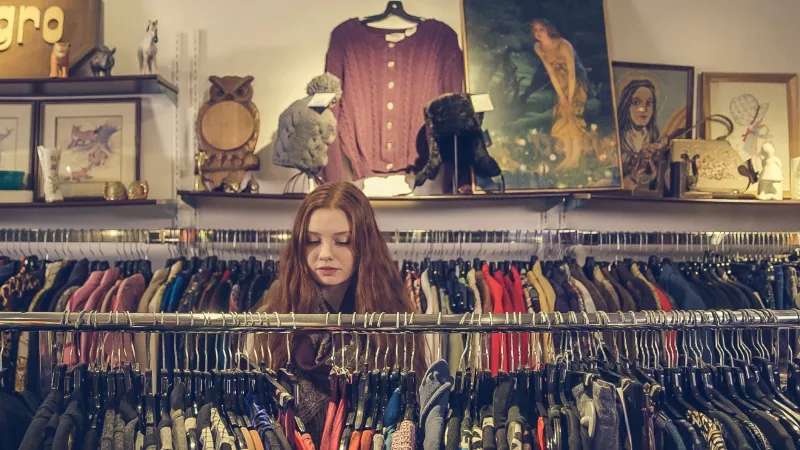
Let's get one thing straight right out of the gate: thrifting is not a consolation prize. It's not what you do when you can't afford something better. Done right, it's the most intentional, most interesting, and honestly most flex-worthy way to build a wardrobe that's completely yours. We're talking about pieces that don't exist on anyone else's Instagram feed, garments built before brands started cutting corners, and the kind of finds that make people stop you mid-stride and ask where you got that.
At Zaraco, we're all about curating with purpose — choosing bold over basic, quality over quantity. And the secondhand market? It's one of the richest hunting grounds out there for exactly that kind of find. You just need to know what you're actually looking at.
Ditch the Bargain Mindset Before You Walk In
The single biggest mistake people make in a thrift store is shopping like they're looking for a deal. That framing sends you straight to the wrong racks, hunting for anything with a low price tag instead of anything with real value. Flip the script. Walk in like a buyer for a boutique — because that's essentially what you are.
Your job isn't to find something cheap. It's to find something worth having. That shift in perspective changes everything about how you move through a store, what you pull off the rack, and what you ultimately walk out with.
The Construction Test: What Good Clothes Actually Feel Like
Before you even look at a label, use your hands. Quality construction has a physical language, and once you learn it, you'll feel the difference immediately.
Start with weight. Garments made from natural fibers — wool, silk, cotton, linen — have a density to them that synthetics just don't replicate. Pick something up and it should feel like it has substance. Limp, papery fabric is almost always a dead end.
Next, flip the piece inside out. Finished seams, especially French seams or flat-felled seams, are a hallmark of quality tailoring. If the interior looks as considered as the exterior — with clean stitching, proper interfacing in collars and cuffs, and no raw edges unraveling — you're holding something made to last. Contrast that with overlocked seams on flimsy material, which is basically the construction equivalent of a handshake you don't trust.
Check buttons, too. Bone, shell, or thick resin buttons are markers of a higher-end original. Hollow plastic buttons that feel lightweight and look slightly off-center? That's a clue about the garment's original price point.
Silhouette Over Trend: The Timelessness Equation
One of the reasons vintage pieces hit so differently is that the best ones were designed around form rather than chasing whatever was trending that season. A well-cut blazer from the '80s or '90s — one with strong shoulders, a clean lapel, and a length that works — is going to look sharp today and five years from now. That's not luck. That's what happens when a designer prioritizes proportion.
When you're evaluating a piece, ask yourself: does this silhouette flatter a human body in a way that's relatively universal? Structured coats, wide-leg trousers, wrap dresses, tailored trousers with a clean break — these are silhouettes that have proven staying power across decades. Avoid anything so aggressively dated that it reads as a costume rather than a garment. There's a difference between vintage character and being stuck in a moment.
Reading Labels Like a Pro
Labels are your cheat code — if you know how to read them. A few things to look for:
Country of origin. Pieces labeled "Made in USA," "Made in Italy," "Made in France," or "Made in England" (particularly from before the mid-'90s) were often manufactured under stricter quality standards and with higher-grade materials than what most mass production delivers today.
Fiber content. Look for 100% wool, 100% silk, 100% cotton, or high-percentage cashmere. Blends can be fine, but anything that's majority polyester is going to wear and age poorly.
Brand recognition. You don't need to be a fashion historian, but it helps to have a loose mental list of legacy brands worth grabbing when you see them. Names like Pendleton, Brooks Brothers, Ann Taylor (older pieces), Evan-Picone, Liz Claiborne from the '80s, or any genuine European designer label are worth a second look. Do a quick phone search if you're unsure — a 30-second Google can tell you if what you're holding is genuinely valuable.
The Authentic Designer Find: What to Actually Look For
Authentic designer pieces do show up in thrift stores. It happens more than people think, especially at Goodwill locations in higher-income zip codes, consignment shops in major metro areas, or estate sales. But counterfeits exist in secondhand markets, too, so do your homework.
For authenticated luxury goods — handbags especially — look at stitching consistency, hardware weight, and interior lining quality. Authentic pieces have an evenness to their construction that's hard to fake at scale. Serial numbers, date codes, and authenticity cards don't always travel with a piece, but their presence is a strong signal. When in doubt, services like Entrupy or a local consignment authenticator can verify before you commit to a higher-priced item.
For clothing, authentic designer vintage is often easier to verify. Labels are typically sewn in (not printed), the font and logo treatment are consistent with the brand's history, and the garment itself reflects the quality standards the house was known for.
Building a Rotation, Not a Collection
Here's where the Zaraco philosophy really kicks in: the goal isn't to accumulate. It's to curate. Every thrifted piece you bring home should earn its place in your rotation. Ask yourself — does this work with at least three things I already own? Does it add something that's genuinely missing from my wardrobe, or am I just excited because it was five dollars?
The best thrift shoppers are also ruthless editors. They leave behind the almost-there pieces and hold out for the ones that make them feel like themselves, just more so.
Where to Shop Smarter
Not all secondhand markets are created equal. Thrift chains like Goodwill and Salvation Army are high-volume and inconsistent, but the upside is that prices are low and turnover is constant — go often. Consignment shops do the curation work for you and tend to carry higher-quality items, though at higher prices. Estate sales and local vintage markets are where the real character pieces live. And for specific items or brands, online platforms like Depop, ThredUp, Poshmark, and The RealReal let you search by brand, size, and condition, which dramatically improves your odds of finding exactly what you're after.
Thrifting well is a skill. It takes patience, a trained eye, and a willingness to walk away from the almost-right thing in favor of the actually-right thing. But when you land a perfectly structured coat, a silk blouse with a label that makes you quietly lose your mind, or a pair of trousers that fit like they were made for you — you'll understand why this is the move. Bold style was never about spending more. It was always about knowing more.