Stop Buying More, Start Wearing Better: The Bold Person's Guide to a Capsule Wardrobe
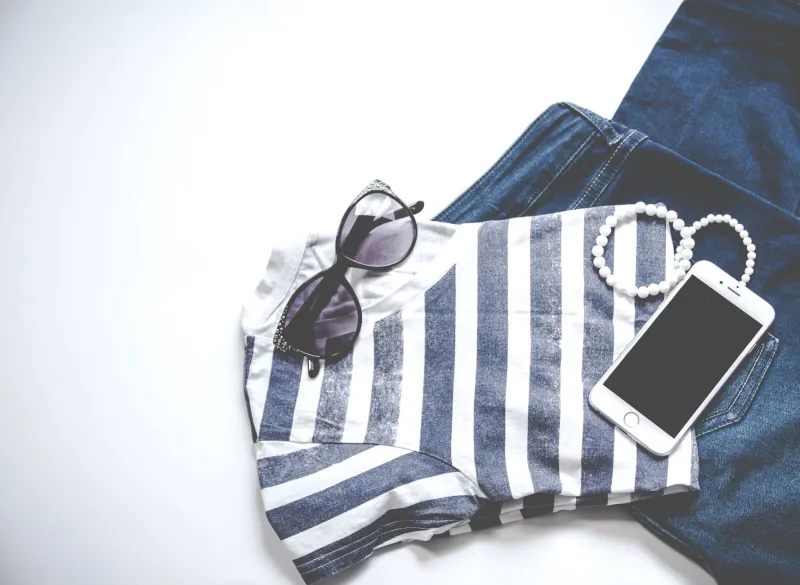
A bigger closet doesn't mean better style — it usually means more noise. For people who dress with intention and refuse to fade into the background, building a capsule wardrobe isn't about minimalism for its own sake. It's about curating a personal uniform that speaks before you even open your mouth.
The irony of bold dressing is that it rarely comes from having more. It comes from having the right things — pieces that work hard, wear well, and carry a point of view. Here's how to build that kind of wardrobe from the ground up.
First, Figure Out What You're Actually Saying
Before you touch a single hanger, you need to ask yourself a question most people skip: What do I want my clothes to communicate?
This isn't about mood boards or aesthetic labels. It's about being honest with yourself. Are you drawn to structure and severity — clean lines, monochromatic looks, architectural silhouettes? Or is your energy more eclectic — layered textures, clashing prints, vintage mixed with new? Maybe it's somewhere in between: refined on the surface with unexpected details underneath.
Write it down. Seriously. A two-sentence description of your style identity will save you from hundreds of impulse purchases. Think of it as your wardrobe's mission statement. At Zaraco, we call this your style anchor — and everything you buy should tie back to it.
The 30-Piece Rule (And When to Break It)
The traditional capsule wardrobe sits somewhere around 30 to 37 pieces, including shoes and outerwear. For bold personalities, that number isn't a hard rule — it's a starting point. The goal is that every item earns its spot.
Here's a rough framework that works for most people building a bold, modern wardrobe:
- 5–7 tops — a mix of basics and at least two statement pieces
- 4–5 bottoms — ranging from versatile trousers to one strong silhouette (a wide-leg, a midi, a structured skirt)
- 3–4 layering pieces — blazers, oversized jackets, or structured cardigans
- 2–3 dresses or jumpsuits — depending on your lifestyle
- 3–4 pairs of shoes — one elevated everyday shoe, one statement pair, one casual option
- Accessories — we'll get into these separately, but they're not an afterthought
The magic isn't in the number. It's in the cohesion. Every piece should be able to have a conversation with at least three other items in your wardrobe.
Color Theory for People Who Aren't Afraid of Color
Here's where a lot of capsule wardrobe advice goes wrong: it defaults to neutrals. Beige, white, black, gray. And look — those colors work. But if your style leans bold, an all-neutral capsule is going to feel like a muzzle.
Instead, think in terms of a personal palette. Choose two to three anchor colors that you genuinely love wearing and that complement your skin tone. These become your neutrals. Then add one to two accent colors — something that pops, something that creates contrast.
For example: a wardrobe anchored in deep navy, warm camel, and off-white, with rust and cobalt as accent colors, gives you enormous range. The anchor colors keep things cohesive; the accents keep things interesting.
A quick tip from color theory: analogous colors (those sitting next to each other on the color wheel) create harmony. Complementary colors (opposite each other) create tension — and tension, in fashion, is often exactly what makes an outfit memorable.
Invest in Fabric Like It Matters (Because It Does)
Fast fashion has trained us to ignore fabric quality. That's a mistake that shows up on your body and in your bank account over time.
For a capsule wardrobe to actually work, the pieces need to hold up — physically and visually. A structured blazer in a quality wool blend will look sharper after ten wears than a polyester version will after two. Natural fibers like cotton, linen, wool, and silk breathe better, drape better, and age better.
When you're evaluating a potential purchase, flip it over. Check the seams. Tug gently at the fabric. Look at the weight and the hand-feel. These aren't snobby things to do — they're practical ones. A piece you wear 40 times costs far less per wear than a cheap item you cycle out in a season.
That said, not everything needs to be a splurge. Basics — plain tees, simple tanks, everyday denim — can be mid-range. Save your investment budget for the pieces that define your look: the statement coat, the structured trouser, the one bag you reach for constantly.
Statement Pieces Are Anchors, Not Chaos
A common fear with bold dressing is that statement pieces will overwhelm everything else. In reality, the opposite is true — when used correctly, statement pieces anchor an outfit and make the basics around them look intentional.
Think of your statement pieces as the loudest voice in the room. They set the tone. Everything else just needs to support them without competing.
Some practical rules:
- One statement per outfit zone. If your top is bold, keep the bottom clean. If your pants are the moment, let the top breathe.
- Let statements repeat. Wearing your standout piece multiple times in a week isn't laziness — it's a power move. It says you know what works.
- Buy statements in your anchor colors. A maximalist print in your palette still feels cohesive. A random trendy color in a statement piece will age out of your wardrobe fast.
Editing Is an Ongoing Practice
Building a capsule wardrobe isn't a one-time project. It's a habit. Every few months, pull everything out and ask the same questions: Does this still reflect who I am? Does it work with at least three other pieces? Do I actually reach for it?
If the answer to any of those is no, it's time to let it go — donate it, sell it, pass it on. The goal is a living wardrobe that evolves with you, not a museum of past purchases.
The boldest thing you can do, style-wise, is to know exactly who you are and dress accordingly — every single day. That's what a real personal uniform looks like. Not a costume. Not a trend. Just you, edited down to the best version.