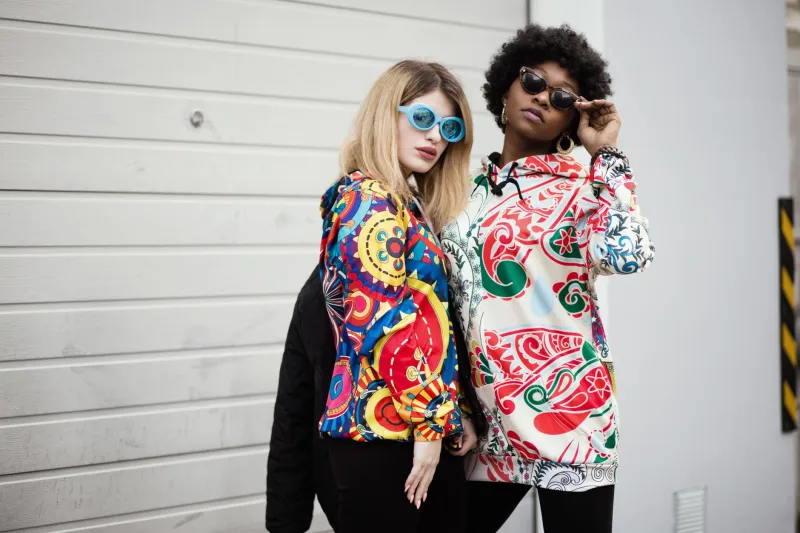
Let's get one thing out of the way: there's nothing wrong with liking what's popular. Trends exist because real people genuinely connect with them. But there's a difference between wearing something because it speaks to you and wearing something because you're terrified of wearing anything else. That second version? It's costing you — and not just in ways you'd expect.
Call it the conformity surcharge. The invisible markup you pay every time you reach for the safe option, the beige option, the everyone's-wearing-it option. It shows up in your bank account, sure. But it also shows up in your energy, your confidence, and the quiet dissatisfaction of opening a packed closet and feeling like you have nothing to wear.
Why We Default to the Middle
Human beings are wired for social belonging. Psychologists have documented this for decades — we mirror the behavior of our peer groups because historically, being accepted by the tribe was a survival mechanism. Fashion is just one arena where that instinct plays out in full public view.
When you're standing in a store or scrolling through a product page, your brain is running a rapid calculation: Will this make me look weird? Will people get it? That mental filter pushes you toward whatever has the most social proof — the thing with a thousand reviews, the silhouette you've already seen on three coworkers, the color that's technically a color but offends absolutely no one.
The problem isn't the instinct. The problem is when that instinct overrides your actual taste, every single time. You end up building a wardrobe that's essentially a costume for fitting in — and costumes wear out fast.
The Financial Math Nobody Talks About
Here's where it gets concrete. Trend-chasing is expensive because trends move. What's everywhere in March is on the clearance rack by August. The ultra-mainstream pieces — the ones every fast-fashion retailer stocks in bulk — are engineered to feel current for exactly one season. That's not an accident. That's the business model.
When you build your wardrobe around whatever's trending on a mass scale, you're essentially signing up for a subscription you didn't know you were paying for. New season, new "essentials," new haul. The average American spends somewhere between $1,500 and $2,000 on clothing annually, and a significant chunk of that goes toward replacing things that weren't really chosen — they were just grabbed because they were safe.
Contrast that with building around a genuine personal aesthetic. When you know what you actually like — the cuts, the textures, the color palette that makes you feel like yourself — you stop impulse-buying. You become a more deliberate shopper. You spend less time second-guessing and more time wearing things you love. The pieces last longer, not just physically, but in terms of how long they stay relevant to your life.
The Confidence Equation
There's a psychological dimension here that's easy to overlook. Wearing what everyone else wears doesn't just cost money — it costs confidence over time. When your style is borrowed from the cultural consensus, you're constantly dependent on external validation to feel good about what you put on. You need the outfit to be recognizable as "on trend" to feel like it's working.
But personal style operates differently. When you develop a point of view about how you dress — even a simple one, even one that takes time to figure out — you stop needing that external confirmation. The outfit works because you decided it works. That's a fundamentally different relationship with your wardrobe, and it shows in how you carry yourself.
People who dress with intention tend to walk differently. They don't fidget with their clothes or scan the room to see if anyone's reacting. They've already done the internal work of deciding the outfit is right. That energy is visible, and it's genuinely magnetic.
Bold Doesn't Mean Expensive
One of the biggest myths keeping people locked into mainstream fashion is the idea that dressing distinctively requires a bigger budget. It doesn't. It requires a clearer sense of direction.
Thrift stores, vintage shops, and independent brands often offer more interesting pieces at lower price points than the major retailers pushing this season's trends. When you're not chasing a specific trending item, you have more flexibility. You can take your time. You can wait for the right piece rather than settling for the available piece.
Smaller brands — the kind that aren't designing by committee or optimizing for maximum mass appeal — tend to produce things with more character. More specificity. More of a reason to exist beyond filling a rack. And because they're not backed by massive marketing budgets inflating the price tag, you sometimes get more garment for your dollar.
At Zaraco, this is literally the philosophy. Curated over crowded. Specific over safe. The pieces worth owning are the ones that mean something to the person wearing them — not the ones that scored highest in a trend forecast.
How to Start Breaking the Pattern
You don't have to overhaul your entire wardrobe overnight. That's not the point, and frankly, it's not realistic. But you can start making slightly different decisions the next time you shop.
Ask yourself: Would I wear this if it weren't trending? If the honest answer is no, put it back. Ask yourself: Does this fit how I actually live, or how I think I'm supposed to look? Those two things are often very different, especially in your twenties and thirties when external pressure about image is at its peak.
Start small. Add one piece that's genuinely you — something you'd have to explain to someone who asked about it, something that didn't come from a "top picks" algorithm. See how it feels to wear it. Notice whether you reach for it more than the safe stuff.
Most people find they do.
The Bottom Line
Blending in has a price. It's not always obvious on the receipt, but it accumulates — in the clothes you stop wearing, the trends you chased and abandoned, the closet full of things that technically work but don't actually excite you.
Dressing boldly, on the other hand, isn't about being loud or avant-garde for the sake of it. It's about making choices that are actually yours. That kind of intentionality pays dividends in both your bank account and your sense of self — and that's a return worth investing in.