What You're Leaving on the Table by Playing It Small With Your Style
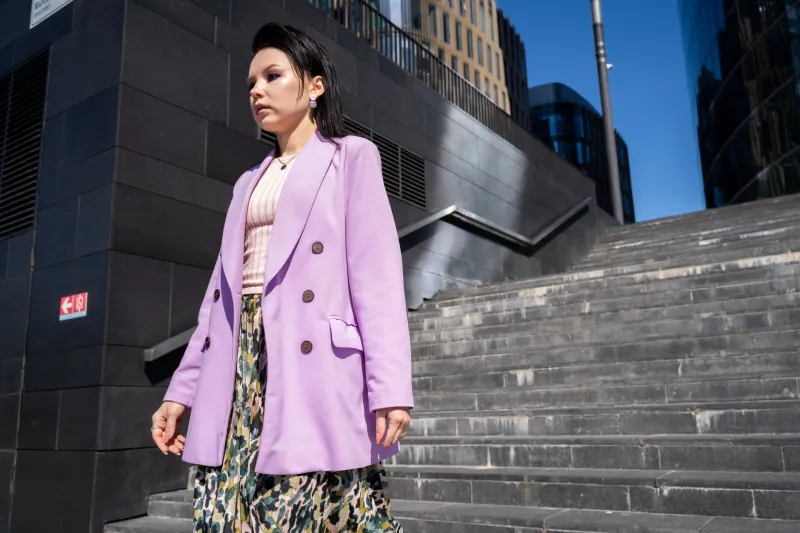
Let's start with something a little uncomfortable: the way you dress is a choice, and that choice has real-world consequences. Not moral ones — nobody's judging your worth as a human being by your outfit. But practical ones. Social ones. Professional ones.
The research on this is less ambiguous than you might expect. And the lived experience of people who've made the shift from safe, apologetic dressing to something more intentional and bold is even less ambiguous. Something changes. Not just in how others see you — in how you operate.
This isn't a piece about looking impressive. It's about what you're quietly giving up every day by dressing like you'd rather not be noticed.
The Psychology Behind "Enclothed Cognition"
In 2012, researchers Hajo Adam and Adam Galinsky published a study that introduced the concept of "enclothed cognition" — the idea that the symbolic meaning of clothing, combined with the physical experience of wearing it, affects the wearer's psychological state and performance.
The famous example from their research: participants who wore a white lab coat described as belonging to a doctor performed better on attention tasks than those who wore the same coat described as a painter's smock, or who simply saw the coat without wearing it. Same garment. Different identity attached to it. Different cognitive outcomes.
What this tells us is that clothes aren't just signals to other people. They're signals to you. When you put on something that communicates authority, creativity, or intentionality — to yourself, not just the room — your brain takes that information seriously.
Dressing like you're trying to disappear sends a message too.
The Workplace Piece Nobody Wants to Say Out Loud
Here's the thing about professional environments: they're social environments first. And in social environments, how you present yourself shapes the assumptions people make before you've said a word.
This isn't about wearing a suit or following a dress code. It's about the difference between someone who clearly made a choice about what they're wearing and someone who clearly didn't. Intentionality reads. Confidence reads. And both of those things influence how seriously people take what you say.
A 2015 study published in Social Psychological and Personality Science found that people who wore more formal clothing in negotiations thought more abstractly and felt more powerful than those in casual dress — which translated to measurable advantages in negotiation outcomes. The clothes weren't the only factor, but they weren't irrelevant either.
More recently, workplace surveys consistently show that employees who feel good about their appearance report higher confidence, higher productivity, and more willingness to speak up in meetings. That last one is worth sitting with. How many good ideas go unsaid because someone doesn't feel like the person in the room who gets to say them?
What "Dressing Like You're Sorry" Actually Looks Like
It doesn't always look like bad clothes. Sometimes it looks like perfectly fine clothes — just chosen specifically to not stand out. Neutral in every sense of the word. Safe. Forgettable by design.
The psychology behind this kind of dressing is usually one of a few things:
Fear of being perceived as trying too hard. American culture has a complicated relationship with visible effort. Caring too much about your appearance can read as shallow, which makes a lot of people actively avoid looking like they thought about it.
Fear of taking up space. For a lot of people — particularly women and people from marginalized communities — being visible feels risky. Blending in feels safer. And sometimes it genuinely is. But there's a cost to that strategy, and it compounds.
Disconnection from self. Sometimes people dress generically because they genuinely haven't thought about what they actually like. They've been dressing for other people's comfort for so long that their own preferences got buried.
All three of these are understandable. None of them are serving you.
The Social Confidence Loop
Here's what people who've made the shift consistently report: when you start dressing in a way that feels genuinely like you — bold, specific, considered — something shifts in how you move through social spaces.
You make eye contact more. You speak first more. You take up physical space more confidently — posture, presence, the way you walk into a room. These aren't small things. They change the nature of the interactions you have, which changes your outcomes, which reinforces the confidence, which makes you dress even more boldly.
It's a loop. And it starts with a choice about what to put on in the morning.
People who've gone through this shift often describe it as surprisingly fast. Not a years-long transformation — more like a few weeks of dressing intentionally before the internal shift catches up with the external one.
The Creative Output Connection
This one is less obvious but worth naming: how you dress affects your creative output.
Several studies on creativity and self-expression suggest that people who engage in deliberate self-expression through appearance — whether through clothing, color, or accessories — show higher scores on divergent thinking tasks. The act of making intentional aesthetic choices seems to prime the brain for other kinds of creative problem-solving.
This makes intuitive sense. Getting dressed with intention is a creative act. It requires you to make decisions about how you want to present yourself, what you want to communicate, what feels right today. That's the same muscle you use when you're brainstorming, designing, writing, or solving problems. Exercising it in the morning doesn't deplete it — it warms it up.
How to Start Without Blowing Up Your Wardrobe
You don't have to rethink everything at once. The shift toward intentional, confident dressing is a practice, not a makeover.
Start with one piece that feels genuinely like you — not safe-you, not other-people's-comfort you. Something that makes you feel a specific way when you put it on. Wear it on a day when you're not under pressure and just notice what happens.
Notice if you stand differently. Notice if you speak differently. Notice if people respond to you differently.
Then add another piece. Then another. Not all at once — just steadily, with intention.
The goal isn't to become someone else. It's to stop hiding who you already are behind clothes that were chosen to take up as little space as possible.
You're leaving real things on the table when you do that. Real confidence. Real creative energy. Real social capital. Real professional presence.
None of that requires a big budget or a dramatic reinvention. It just requires deciding that you're worth dressing like you mean it.